Structured Finance Solutions: Unlocking New Opportunities for Business Growth
When traditional loans fall short of supporting your business growth ambitions, structured finance solutions can provide alternative ways to raise capital and fund large-scale expansion.
Growing businesses often reach a stage where conventional financing is no longer sufficient. Banks may offer limited funding, impose strict repayment conditions, or require collateral that does not align with the company’s financial requirements.
This is where structured finance comes into play. It helps businesses explore customized funding arrangements to support acquisitions, infrastructure development, asset expansion, and other strategic initiatives.
From infrastructure projects and real estate portfolios to corporate expansion, structured finance offers businesses access to capital beyond conventional lending options.
What Is Structured Finance and How Does It Work?
Structured finance refers to customized financial arrangements designed to meet complex business funding requirements that traditional lending may not adequately address.
Unlike standard business loans, structured finance involves designing funding solutions around a company’s assets, receivables, cash flows, and overall financial position.
These arrangements can combine different sources of capital and risk-sharing mechanisms to create financing structures suited to specific business objectives.
Some key structured finance instruments include:
-
Asset-Backed Securities (ABS): Financial instruments backed by underlying assets or receivables.
-
Special Purpose Vehicles (SPVs): Separate legal entities established for specific financial transactions or projects.
-
Collateralized Debt Obligations (CDOs): Structured financial products backed by pools of debt instruments.
-
External Commercial Borrowings (ECBs): Loans raised by eligible Indian entities from recognized non-resident lenders, subject to applicable regulations.
Why Do Growing Businesses Need Structured Finance?
Business expansion requires more than just additional capital. Companies need financing that matches their growth plans, repayment capacity, and long-term objectives.
Traditional financing may not always provide the flexibility or funding capacity required for large-scale projects.
Structured finance can offer several advantages:
1. Higher Funding Potential
Businesses may access larger funding arrangements depending on their asset base, cash flows, and transaction structure.
2. Flexible Repayment Structures
Financing arrangements can be designed around expected cash flows and project timelines.
3. Better Risk Management
Structured financing can distribute financial risks among different participants and investors.
4. Access to Institutional Investors
Businesses may explore funding opportunities through institutional investors and alternative capital providers.
5. Support for Large-Scale Projects
Structured finance can support acquisitions, infrastructure development, real estate projects, and corporate expansion.
The suitability of each benefit depends on the transaction structure, regulatory requirements, and financial position of the business.
Exploring Different Business Financing Solutions
Structured finance is often combined with other funding instruments to create a comprehensive financial strategy.
Businesses can explore different financing solutions based on their requirements.
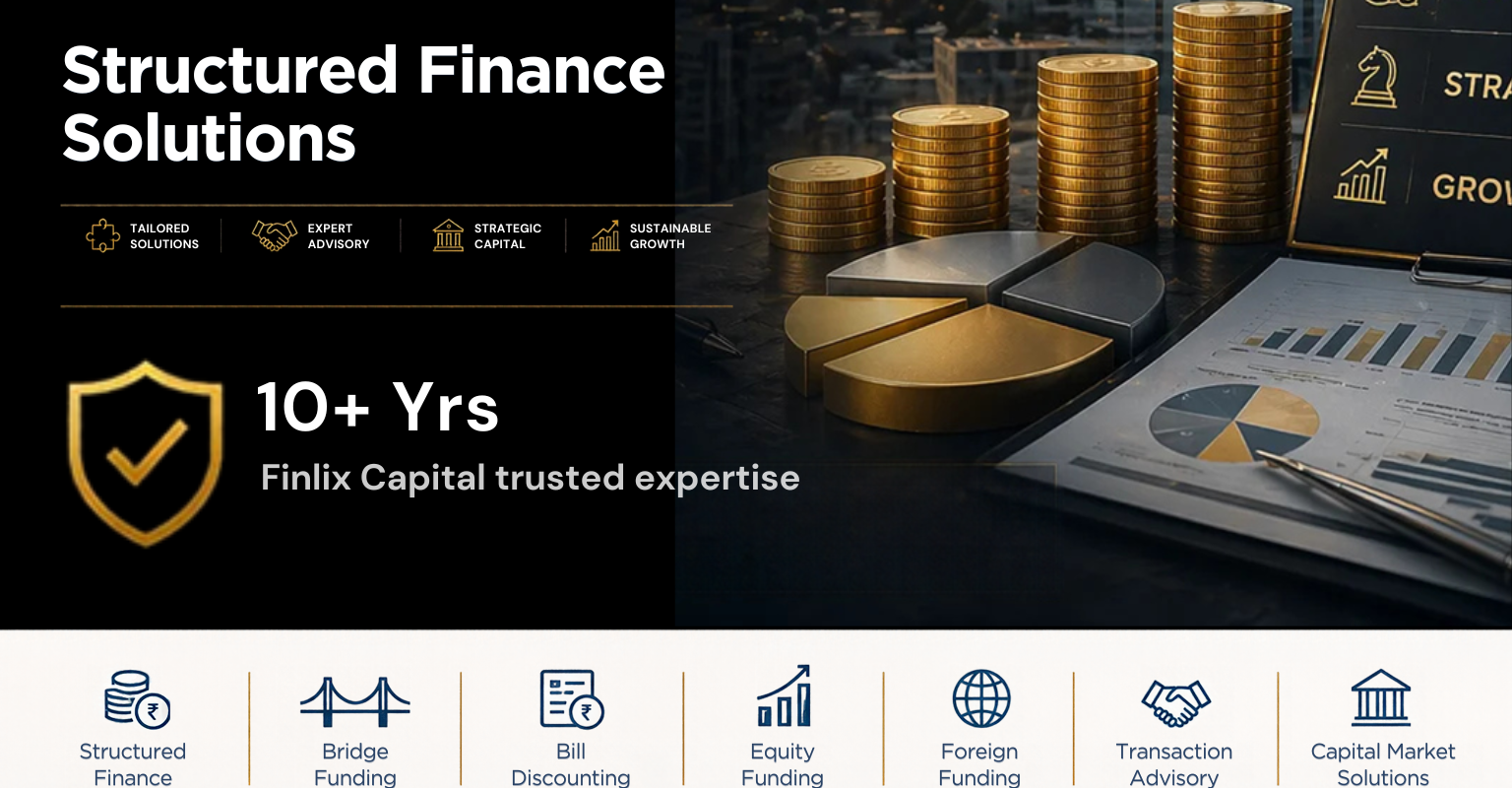
| Financial Solution | Purpose |
|---|---|
| Structured Finance | Customized funding for complex transactions |
| Bridge Funding | Short-term funding for immediate financial requirements |
| Bill Discounting | Unlocking funds against eligible unpaid invoices |
| Equity Funding | Raising capital in exchange for ownership |
| Foreign Funding | Accessing eligible international capital sources |
| External Commercial Borrowings | Raising eligible overseas loans |
| Transaction Advisory | Financial guidance for complex transactions |
| Capital Market Solutions | Exploring capital-raising opportunities through markets |
The right financing combination depends on your business model, asset quality, cash flow position, and growth plans.
Professional transaction advisory and financial assessment can help identify an appropriate funding structure.
How Structured Finance Supports Indian Businesses
Structured finance can be relevant across multiple industries in India.
Here are some examples of how businesses may use customized financing arrangements:
1. Logistics and Transportation
A logistics company with predictable receivables may explore invoice financing or receivables-backed funding to support fleet expansion and operational requirements.
2. Real Estate and Infrastructure
A property developer may use an SPV-based financing structure to raise project-specific capital for real estate or infrastructure development.
3. Healthcare Industry
An eligible healthcare business may explore external commercial borrowings to finance equipment procurement or other approved business requirements.
4. Growing Corporate Businesses
Companies planning acquisitions, entering new markets, or expanding operations may explore structured debt and equity-based funding options.
In each case, the financing arrangement should be designed around the underlying assets, cash flows, repayment capacity, and applicable regulations.
How Finlix Capital Supports Business Funding Requirements
At Finlix Capital Pvt. Ltd., we understand that every business has different financial requirements and growth ambitions.
Our objective is to help businesses explore suitable financing opportunities through structured financial solutions, funding support, and advisory services.
We assist businesses in exploring solutions such as:
-
Bill Discounting
-
External Commercial Borrowings (ECBs)
-
Transaction Advisory
Our approach focuses on understanding business requirements, evaluating funding possibilities, and connecting businesses with appropriate financial institutions and capital providers.
Whether you are planning expansion, managing working capital, or exploring funding for a major project, the right financial strategy can make a meaningful difference.
Is Structured Finance the Right Choice for Your Business?
Structured finance may be worth exploring if your business:
-
Has significant assets or predictable cash flows.
-
Is planning a major expansion or acquisition.
-
Requires funding beyond conventional loan limits.
-
Needs a customized repayment structure.
-
Is exploring institutional or alternative funding sources.
However, structured finance transactions can involve legal, valuation, due diligence, and structuring costs. Therefore, businesses should carefully evaluate the financial feasibility and regulatory requirements before proceeding.
Working with experienced financial advisors can help businesses understand available opportunities and identify suitable financing structures.
Ready to Explore Structured Finance Solutions?
Your next business expansion may require a different approach to financing.
At Finlix Capital Pvt. Ltd., we help businesses explore structured finance, bridge funding, equity solutions, and other customized financial opportunities based on their requirements.
Connect with Finlix Capital today to discuss your business funding requirements and explore the right financial solutions for your growth.
Frequently Asked Questions (FAQs)
1. What is structured finance in business?
“For businesses exploring international borrowing options, the Reserve Bank of India’s External Commercial Borrowings guidelines provide important information about applicable borrowing regulations and requirements.”
2. How is structured finance different from a traditional business loan?
Traditional business loans generally follow predefined lending terms, eligibility criteria, and repayment structures. Structured finance offers customized funding arrangements based on a company’s assets, cash flows, financial requirements, and risk profile.
3. Which businesses can benefit from structured finance?
Medium-sized and large businesses, infrastructure companies, real estate developers, logistics firms, and growing corporate organizations may benefit from structured finance, depending on their financial position and funding requirements.
4. What are the common types of structured finance?
Some common structured finance instruments include:
-
Asset-Backed Securities (ABS)
-
Special Purpose Vehicles (SPVs)
-
Collateralized Debt Obligations (CDOs)
-
External Commercial Borrowings (ECBs)
-
Receivables-backed financing
5. Can structured finance help businesses fund expansion?
“To understand the regulatory framework for securitisation in India, businesses can refer to the RBI Securitisation of Standard Assets Directions.”